Why acro should be taught as its own discipline, not a trick in a jazz class
A back walkover learned as a party trick and one learned as a progression are not the same skill.
September 21, 2026 · 3 min read
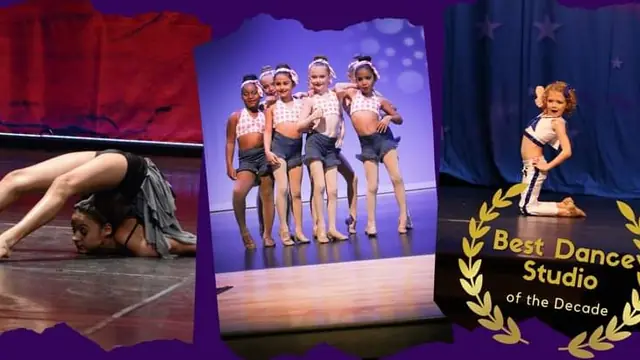
Acro turns up in two very different forms at dance studios. In one, it is a trick a teacher adds to a jazz routine because it looks good in the middle eight. In the other, it is its own discipline with its own progression, its own conditioning and its own levels.
They produce different dancers, and more importantly they produce different injury rates.
What acro actually is
Acro is the integration of acrobatic skill into dance technique. It is not gymnastics with music, and it is not dance with a cartwheel in it. The distinctive thing is the seamlessness: the transition into and out of a skill has to read as choreography rather than as a pause for a stunt.
That is genuinely difficult, and it is why the training looks slower than parents expect. A dancer working on a back walkover in a proper acro programme spends a lot of time on things that are not a back walkover.
Why the progression matters for a growing body
The skills look like flexibility. Most of them are actually strength.
A back bend held by a strong back and shoulders is a controlled shape. The same visual position reached by a child who simply has loose joints and no supporting strength is a shape their body is hanging in rather than holding. Both look similar in a photograph. Only one of them is safe to repeat several hundred times across a season.
This is why progressions exist and why skipping them is the thing to watch for. A child who can do a skill is not the same as a child who has earned it, and young dancers are frequently flexible enough to reach positions their strength has not caught up with yet. A structured programme holds them at the conditioning stage precisely when they feel ready to move past it.
What levelled acro looks like
At Studio 8 the acro track runs as its own set of classes rather than as an add-on. Beginning Tumble, Progressive Acro, Int/Adv Tumble, and Adv Tumble 1 and 2, with Contortion 1 and 2 alongside.
- Beginning Tumble, where the conditioning and the basic shapes are built
- Progressive Acro, working the skills into dance rather than isolating them
- Int/Adv Tumble, then Adv Tumble 1 and 2 for genuine tumbling passes
- Contortion 1 and 2, a separate track with its own strength requirements
The number of separate rungs is the point. Six levels across two tracks means a dancer can be moved at the pace their body is actually working at, rather than being put into whichever of two classes has space.
Contortion is not extreme flexibility
It is worth separating out, because contortion has a reputation that does not match how it is trained well. Taught properly it is among the most strength-dependent things in the building, and the extreme-looking end positions are the visible tip of a great deal of unglamorous conditioning.
Taught badly it is a child being pushed into a shape. The difference between the two is entirely in whether there is a progression underneath, which is the same test as everywhere else in this article.
What to ask a studio about its acro
Three questions will tell you most of what you need.
- Is acro its own class, or a skill added inside another class?
- How many levels are there, and how does a dancer move between them?
- What does a beginner spend their first term doing?
If the answer to the third is mostly conditioning and basic shapes, that is the right answer, even though it is the less exciting one to hear. A programme that has a beginner attempting an aerial in term one is optimising for something other than the dancer.
Where it leads
For most students, a stronger and more capable body and a set of skills that make them more castable in every other style they take. For a few, considerably further: Studio 8 dancers have competed at the Acrodance World Championships.
Neither outcome comes from treating it as a trick. If you want to see how the levels sit against the rest of the class ladder, the weekly schedule lists them, and the office can tell you where a particular child would start.
Studio 8 Dance, (239) 338-7107
Call (239) 338-7107More articles
What actually happens in a three year old's first dance class
The honest version, including the part where your child stands still for eleven minutes and that is fine.
Recital week without the stress: a run sheet for Cape Coral dance parents
Most recital-day stress is caused by four things, and all four are solvable the week before.