Programs
Six stages, and the honest difference between them
Studio 8 sorts dancers by where they actually are rather than by the style they picked first. Every stage below is the studio’s own, with its own entry point.
What changes between the stages
The names are not decorative. Each one marks a real change in what a class is asking of a dancer, and the last two are not reached by having a birthday. On the studio’s own homepage the three middle stages are listed as Discover Dance, Develop Dance and Experience Dance, which is the same ladder described for parents arriving cold.
- DiscoverAges 2 to 5
- The entry stage, and for most families the first dance class of any kind. Homepage copy calls it finding your first class for brand new dancers, and that is exactly the scope: one room, one teacher, and a child who wants to come back.
- ExploreAges 5 to 7
- Styles begin to separate. A dancer who has only ever done one thing starts meeting others, and the studio starts seeing which ones hold their attention.
- DevelopAges 7 to 9
- Broaden your horizons with more style choices, in the studio's own words. This is usually where one class a week becomes two or three.
- ExperienceAges 10 and up
- Advanced options for experienced students. Technique is assumed rather than taught from scratch, and Company 8 becomes a live question.
- Master (By Approval)By approval
- Not a level you age into. Dancers are approved in when the technique is genuinely there, which is why no date is published for it.
- Create (By Application)By application
- The top of the ladder, entered by application. The Conservatory sits here: a fully immersive one to one collaborative partnership curated to one dancer's goals, whether that is personal wellness, artistic exploration or a pre-professional ambition.
What a first class actually looks like for a three year old
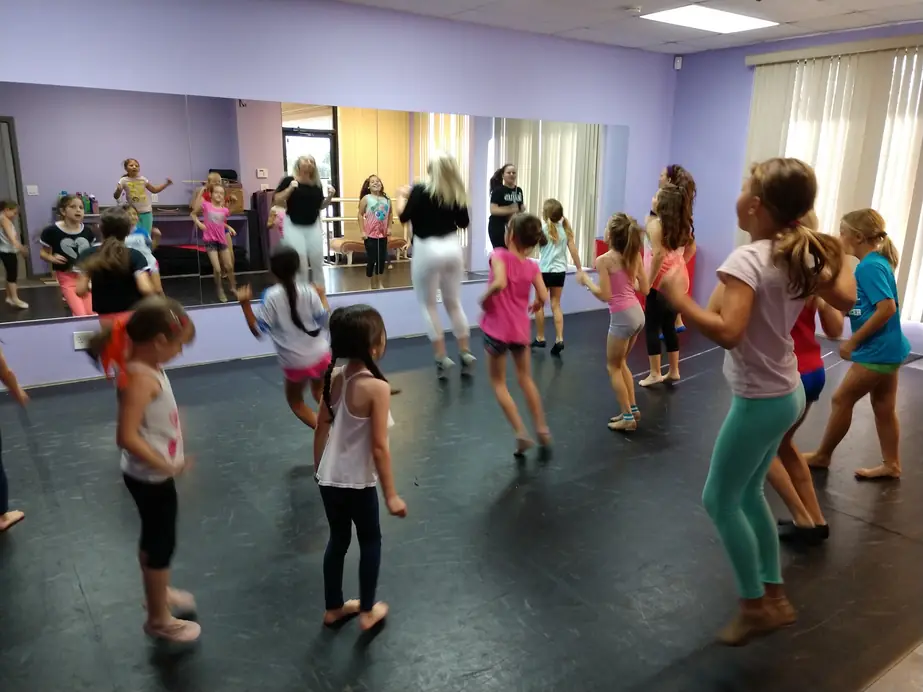
Small room, owner teaching, and no expectation that a three year old can hold a line. Discover exists to find out whether your child likes being in a dance room at all, which is a different question from whether they will be good at it.
If one style feels like too early a commitment, Tiny Stars is the alternative entry point, below. Either way the trial class costs nothing, so the decision does not have to be made in advance.
How the styles stack as a dancer moves up
A dancer does not swap one style for another on the way up the ladder. They add. Levels run from Petite and Junior Company through Teen and Senior Company, and the weekly schedule is built so a student can hold several styles in one week without three separate registrations. Leaps and Turns runs once a month and carries no recital piece, so it can be added without adding a costume.
- Ballet
- Tap
- Jazz
- Hip Hop
- Lyrical
- Contemporary
- Musical Theater
- Acro, beginning tumble to advanced
- Progressive Acro
- Contortion 1 and 2
- Acting
- Technique
- Leaps and Turns
- Adult Tap
The live weekly grid, with days and levels, is on the class schedule.
Tiny Stars, the sampler route in
Tiny Stars is for three to six year olds and deliberately does not ask a small child to choose. It samples ballet, tap and acro in one class so a student meets three disciplines without being overwhelmed by any of them, and it uses songs from the studio’s Ready, Set, Dance partnership with Nickelodeon. It runs Mondays, Tuesdays and Wednesdays.